Your Palm Oil Supplier was just Replaced by a General
The world's largest palm oil trader has just been convicted of corruption by Indonesia's Supreme Court. The company it supplied its land to has no audit history, no certification, and no prior experience in palm oil. Neither fact appears in any major brand's sustainability disclosure.
by Evidencity | AI Assisted | 100% Human Verified
The Dove soap in your bathroom and the Kit Kat in your desk drawer share a supplier beyond palm oil: Wilmar International, the Singapore-listed trading giant that moves roughly 40 percent of the world's palm oil and anchors the certified sustainable supply chains that Unilever, Nestlé, Colgate-Palmolive, and Procter & Gamble have spent years building.
In September 2025, Indonesia's Supreme Court found Wilmar guilty of corruption — securing palm oil export permits unlawfully during a 2022 cooking oil shortage. The acquittal had been delivered by four judges who were subsequently arrested on suspicion of accepting bribes to reach a favourable verdict. Wilmar had already handed $725 million to Indonesia's Attorney General's Office as a security deposit pending resolution. The plantations behind those certified supply chains — 1.7 million hectares of palm oil land — were simultaneously being transferred to PT Agrinas Palma Nusantara: a company that did not exist as a palm oil operator before March 2025, run by retired military generals, whose president director told parliament at his appointment: "My job used to be to run around and go undercover. But now I'm told to take care of palm oil. This is an honor, a mandate even though I know nothing." Not a single major consumer brand has publicly addressed what this means for the sustainability documentation attached to their Indonesian palm oil.
The Crackdown That Looked Like a Cleanup
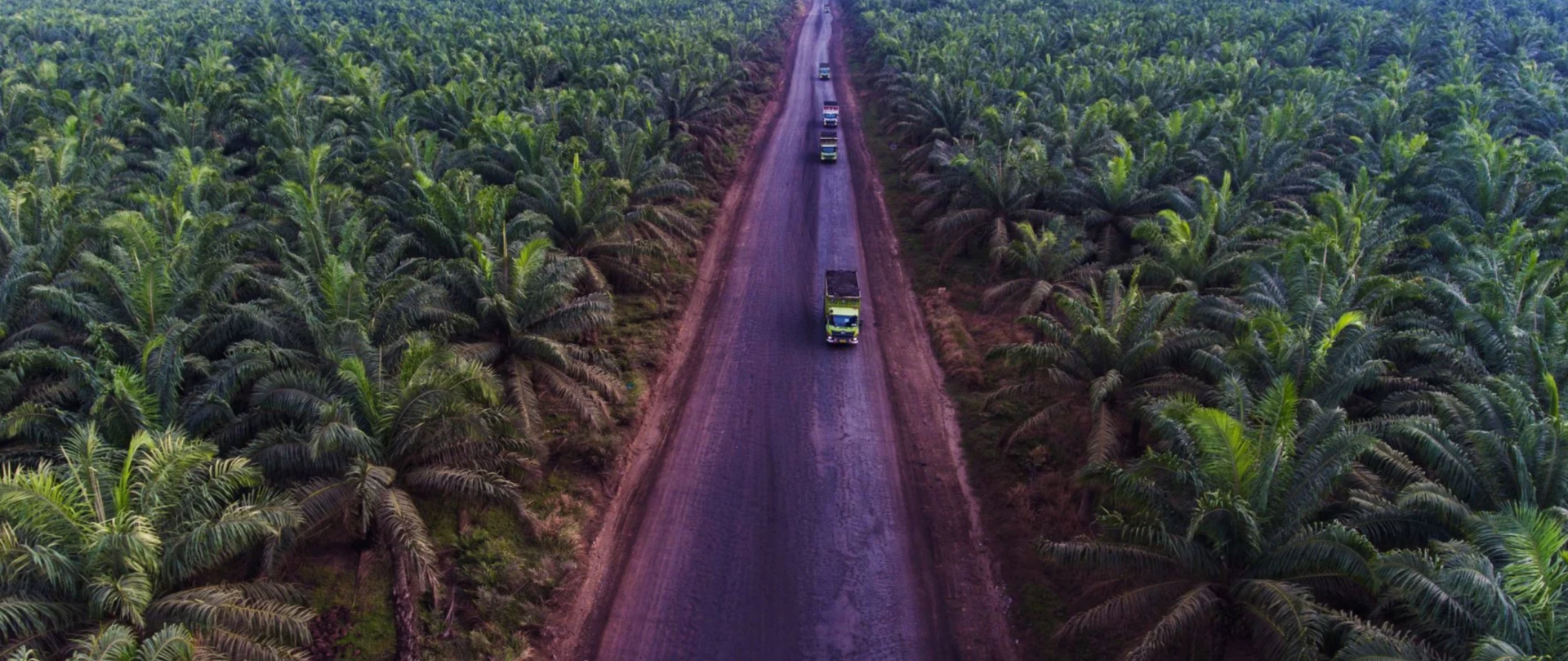
Indonesia's palm oil sector entered 2025 appearing to clean up its act. Jakarta launched the most aggressive land governance crackdown in the country's history, seizing more than four million hectares of plantations operating illegally in designated forest zones. Corrupt tycoons faced prosecution. Duta Palma Group's owner had 221,000 hectares confiscated amid a money laundering investigation. Soldiers posted government control notices across Kalimantan and Sumatra on estates that had operated in legal grey zones for decades.
For compliance teams at global consumer goods companies, the signals looked right. Illegal operators removed. Government enforcement visible. Wilmar, the trader sitting between those plantations and the brands, held RSPO certification, a public sustainability dashboard listing its mill suppliers, and a stated commitment to deforestation-free sourcing. Standard screening showed no OFAC sanctions, no Interpol notices.
A Construction Company Now Runs The World’s Largest Palm Oil Operation
Indonesia's palm oil sector is not the first commodity chain the Prabowo administration has restructured through military-state consolidation. Earlier this year, Evidencity documented how PT Timah — the state tin monopoly whose former directors were convicted of laundering $20 billion in illegally mined ore — was handed $420 million in seized private smelters and placed under a retired army colonel by presidential directive. The pattern across tin and palm oil is identical: enforcement used to consolidate control, not create transparency.
Agrinas Palma Nusantara did not exist as a palm oil company before March 2025. Converted from PT Indra Karya, a state infrastructure consultancy, by presidential directive and placed under Danantara — Prabowo's newly created sovereign wealth fund — it became the world's largest palm oil company by managed area within nine months: 1.7 million hectares drawn from 232 private operators whose identities the government declined to disclose. It aims to control three million hectares by 2029.
Agrinas holds no RSPO certification, no track record on labour standards, no independently verified environmental baseline, and no traceability infrastructure. Industry association GAPKI reported that members' harvest proceeds flow entirely to Agrinas accounts with payments to former partners delayed beyond 30 days. Smallholder farmers offered joint venture arrangements retaining only 55 to 60 percent of revenue have largely walked away, leaving plots unmaintained. One cooperative in Kalimantan saw monthly fruit production fall from between 80 and 100 metric tonnes to 23.
The RSPO — the certification body whose standards underpin Wilmar's sustainability claims — issued a holding statement acknowledging the Supreme Court ruling, noting it was awaiting the written judgment to determine whether violations of its Key Documents had occurred. Three of its certified members had just been found guilty of corruption by Indonesia's highest court. The certification framework had no mechanism to have caught it beforehand.
Company Compliance No Longer Matches the Land
The EUDR — requiring palm oil entering EU markets to be deforestation-free and legally produced — has been delayed twice and is now scheduled for enforcement at the end of 2026. Companies used that delay to build traceability documentation anchored to specific operators on specific land. Agrinas now controls that land. Its concession history across 232 unnamed former operators is, by the government's own admission, undisclosed, and the company has submitted to no independent environmental audit. Under EUDR Article 9, operators must provide "adequately conclusive and verifiable information" that products are deforestation-free. Verifying that standard against a military-administered state entity reporting to a sovereign wealth fund, with no independent audit access, is not a compliance exercise — it is an audit impossibility.
EUDR non-compliance carries fines of up to four percent of total annual EU turnover. For a company the size of Unilever, with over €60 billion in revenues, that is a multi-billion euro liability attached to a supply chain that has structurally changed beneath their existing documentation. Fastmarkets estimates between two and five million tonnes of Indonesian CPO production face serious supply uncertainty in 2026 as plantation maintenance collapses under the Agrinas transition.
Opacity by Executive Fiat
Indonesia's palm oil crackdown removed corrupt operators and replaced them with a structure that is harder to audit, not easier. The world's largest palm oil company by area is a military-led state entity created nine months ago from an infrastructure consultancy — without certification, without a disclosed concession history, without independent oversight. Its primary trading partner has just been convicted of corruption by the country's Supreme Court.
The brands whose products reach consumers marked "sustainably sourced" have built their compliance architecture around mill lists, RSPO certification, and trader-level commitments. A presidential decree transferring 1.7 million hectares to retired generals sits outside every framework they have.
Evidencity's Illicit Network Intelligence maps the ownership structures, military connections, and corporate relationships that entity-based screening cannot reach. In Indonesian palm oil in 2026, the risk isn't hidden in a shell company. It's sitting at the top of the supply chain, wearing a uniform.