The helium your chip supplier just bought may have come from Russia
Iranian strikes on Qatar’s gas terminals have knocked out a third of global helium supply. The scramble for alternatives is opening a sanctions exposure that big data-driven screening tools were never designed to detect.
by Evidencity | AI Assisted | 100% Human Verified
On 2 March 2026, Iranian drones struck two facilities simultaneously: a water tank at Mesaieed Industrial City and an energy installation at Ras Laffan Industrial City, 80 kilometres northeast of Doha. QatarEnergy, the world’s largest LNG producer, immediately ceased production of liquefied natural gas and all associated products. European wholesale gas prices surged almost 50 percent within hours, the biggest single-day jump since Russia’s invasion of Ukraine four years earlier.
On 18 March, Iran struck again. Qatar’s Foreign Ministry condemned the attack as causing extensive damage to Ras Laffan, a flagrant violation of state sovereignty and a direct threat to national security. QatarEnergy’s CEO Saad Sherida al-Kaabi confirmed that 17 percent of Qatar’s LNG export capacity had been destroyed, and that repairs would take three to five years.
Most coverage has remained focused on oil and gas prices. Almost nothing has been written about helium.
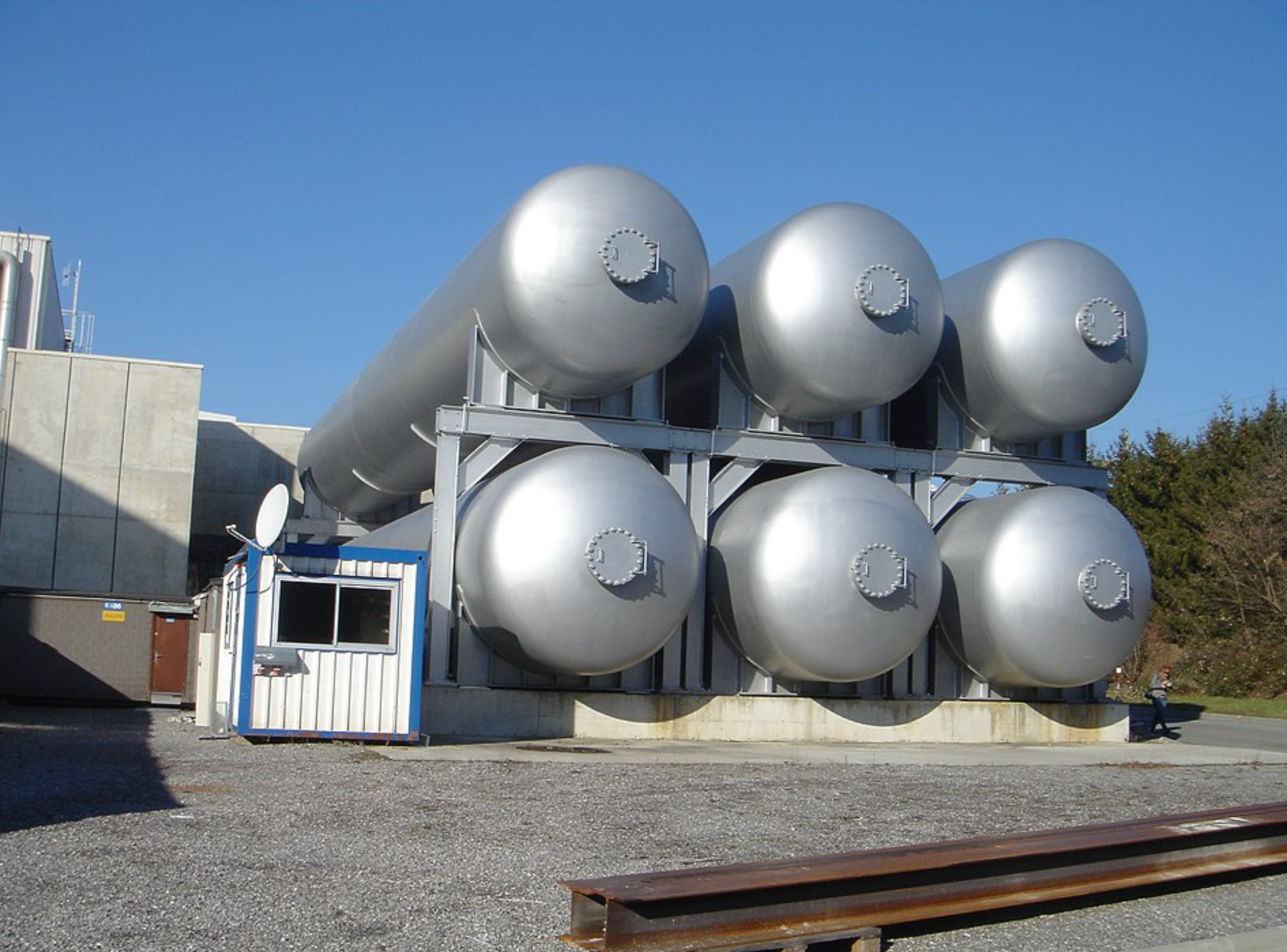
Helium is a byproduct of LNG production. Qatar accounted for roughly one-third of global supply in 2025. There are three helium plants at Ras Laffan, two of which produce helium from LNG waste gas. When the Strait of Hormuz closes and LNG storage tanks fill, those plants shut down. The specialised containers used to transport liquid helium hold it for 35 to 48 days before it boils off and escapes. Prices have doubled since the war began. Airgas, one of the world’s largest distributors, has declared force majeure and cut customer shipments by half.
Under current semiconductor manufacturing processes, there is no viable replacement for helium to cool wafers, according to Jong-hwan Lee, a professor of semiconductor devices at South Korea’s Sangmyung University. Chipmakers use it to control wafer temperature during the etching process that prints the circuitry inside every advanced chip powering AI infrastructure. South Korea, home to Samsung and SK Hynix, the world’s two largest memory chipmakers, sourced roughly 65 percent of its helium from Qatar last year.
The supply crisis is visible. The sanctions exposure it is generating inside corporate supply chains is not.
Three of four producers, effectively off the table
The helium market has four major producers: the United States, Qatar, Algeria, and Russia. With Qatar offline and the Strait of Hormuz closed, three of the four are now effectively unavailable to Western buyers simultaneously.
Algeria’s output is modest, insufficient to compensate for the Qatari gap. The United States, now the largest single producer at roughly 81 million cubic metres annually, is ramping domestic output, but industry analysts are unambiguous: American supply cannot replace one-third of global production on any near-term timeline. Semiconductor manufacturers have already indicated they will not meet their 2030 goals, according to Cliff Cain of Pulsar Helium, who told CBS News there is simply no way to boost supplies in the short term.
That pressure is pushing procurement teams toward alternatives. And that is where the sanctions exposure begins.
Russia is the world’s third-largest helium producer, operating primarily through Gazprom’s Amur Gas Processing Plant in Eastern Siberia. Before the Iran war, Russian helium was already moving through global markets at a steep discount, roughly $310 per thousand cubic feet in 2025, against approximately $470 for Qatari volumes, according to S&P Global. The primary destination was China. Russia-to-China helium exports rose 60 percent year-on-year in 2025, according to the Center on Global Energy Policy.
That trade pattern matters because of what Western sanctions have already made explicit. The EU’s 14th sanctions package, adopted in June 2024, introduced a ban on Russian helium imports into the EU, which came into force on 26 September 2024. The stated objective was to prevent new dependencies on Russian supply and to deny Moscow the revenue. For EU-based companies and their supply chains, sourcing Russian-origin helium, directly or through intermediaries, carries live legal exposure.
Two recent developments have tightened the picture further. On 14 April, Russia imposed export controls on helium through end-2027, requiring Prime Ministerial approval for any shipment outside the Eurasian Economic Union. Russian officials framed the measure as a domestic supply priority, but the timing, as spot prices surge following Qatar’s shutdown, points toward a deliberate effort to leverage scarcity. Simultaneously, China announced plans to add domestic capacity, with Russia planning to add a further 700 million standard cubic feet from the third quarter of 2026.
The mechanism through which sanctions exposure enters Western supply chains is indirect but documented. Russian helium, barred from EU markets, flows to China for use in non-semiconductor industrial applications, fibre optics, welding, medical equipment. That displacement frees up helium qualified for semiconductor use from other sources, which then moves through the spot market toward chipmakers scrambling to maintain production lines, according to S&P Global research director Ralf Gubler. The molecule that arrives at a European or American fab carries no label indicating what it displaced or whose revenue it ultimately served.
Procurement teams buying from secondary traders or spot market brokers during a shortage have no automatic mechanism for tracing provenance. Phil Kornbluth, president of Kornbluth Helium Consulting, told CNBC it is getting hard to imagine the world is not facing a minimum two-to-three months of helium production shutdown, followed by a four-to-six month period before supply chains return to normal. That is a long time to be making sourcing decisions under duress, without visibility into the networks behind the supply.
A two-layer risk that standard tools were not built to see
South Korea’s government has flagged helium as one of 14 semiconductor materials now under emergency monitoring, with Samsung and SK Hynix, whose combined output underpins global memory supply, holding stocks estimated to last only until June 2026. TSMC, which manufactures roughly 90 percent of the world’s most advanced logic chips, has said it is monitoring the situation. Neither company has confirmed alternative supply is secured beyond existing inventory.
For corporate counsel and procurement teams at multinationals with electronics or AI infrastructure exposure, the risk calculus has two distinct layers.
The first is operational: a prolonged helium shortage delays chip production, extends lead times, and raises input costs across every product category that depends on advanced semiconductors, from data centre hardware to automotive systems to medical devices. The four largest hyperscalers, Amazon, Google, Microsoft, and Meta, are expected to spend more than $350 billion on capex in 2025 alone, according to KKR, with total AI infrastructure spending projected to climb toward $600 billion in 2026. That capital commitment assumes chip supply. A sustained helium shortage puts the assumption at risk.
The second layer is legal. The EU ban on Russian helium imports has been in force since September 2024. Any EU-based entity whose supply chain, however many intermediaries deep, terminates in Russian-origin helium is operating outside that framework. The opacity of spot market procurement during a shortage is precisely the condition under which that exposure accumulates undetected.
This is the category of risk that big data-driven screening tools do not reach. Automated screening identifies known counterparties at the tier one and tier two supplier level. It does not map the commodity flows and intermediary networks that sit further upstream, determining what a counterparty is actually selling, or where it originally sourced what it is now moving at a premium into a supply-starved market. Evidencity’s Illicit Network Intelligence data is built to trace from source to consumer, following the network behind a transaction rather than working backwards from a named supplier on a contract.
A narrow window before the decisions become permanent
The helium shortage will eventually resolve. American producers are ramping output. New capacity is coming online in Canada and South Africa. The Strait of Hormuz may eventually reopen, it briefly did on 17 April before Iran closed it again within hours, but a negotiated resolution remains elusive, and the ceasefire that expires this Wednesday 22 April offers no guarantee of one. But the sourcing decisions being made right now, under duress, at speed, through brokers and spot market intermediaries that procurement teams have never screened, will outlast the crisis that produced them.
Supply chain exposure does not expire when the emergency does. The contracts signed during a shortage, the intermediaries onboarded to fill a gap, the commodity flows that moved through networks no one mapped, these become the audit findings, the regulatory inquiries, and the enforcement actions of the following year.
The Ras Laffan strikes accelerated a vulnerability that was already present. Corporate supply chains dependent on a single geographic chokepoint for a critical input, and lacking the network-level intelligence to understand alternative sourcing under pressure, were exposed long before the first drone reached Qatar. The Iran war has made that exposure visible, and time-limited.
The Ras Laffan strikes have given corporate counsel and procurement teams a narrow window to ask a question most have not yet asked: do we actually know where our helium comes from, and whose revenues we are sustaining in the process of keeping our production lines running?
Evidencity’s Illicit Network Intelligence data was built to help answer exactly that kind of question.