How Modern Slavery Survives a Court Ruling
Ecuador's Constitutional Court ordered Furukawa Plantaciones to pay $41 million for five decades of forced labour. Fifteen months later, a sister company is shipping the abaca, the victims are facing eviction, and the bill remains unpaid.
By Evidencity | AI Assisted | 100% Human Verified
Ecuador's Constitutional Court ordered Furukawa Plantaciones to pay $41 million in reparations for maintaining slavery-like conditions from 1963 to 2019. The company's response: fire all 342 plaintiffs, pay nothing, and shift operations to a sister entity that conventional screening can't connect.
Trade data from March 2025 shows Mavenz Inc. — Furukawa's Japanese parent company — now receiving abaca shipments from Marca Abacá S.A., not from Furukawa itself. Marca Abacá was founded in 2019 by an attorney who simultaneously served as legal representative for both companies while holding office as Ecuador's Secretary General of the Vice Presidency. In January 2023, Mavenz purchased a 33% stake. By March 2025, Furukawa's workforce had collapsed from 296 employees to 92.
Standard screening flags Furukawa Plantaciones (Risk Score: 100) as sanctioned. Marca Abacá S.A. (Risk Score: 70) registers as a separate legal entity with clean corporate filings.
A Court Victory on Paper
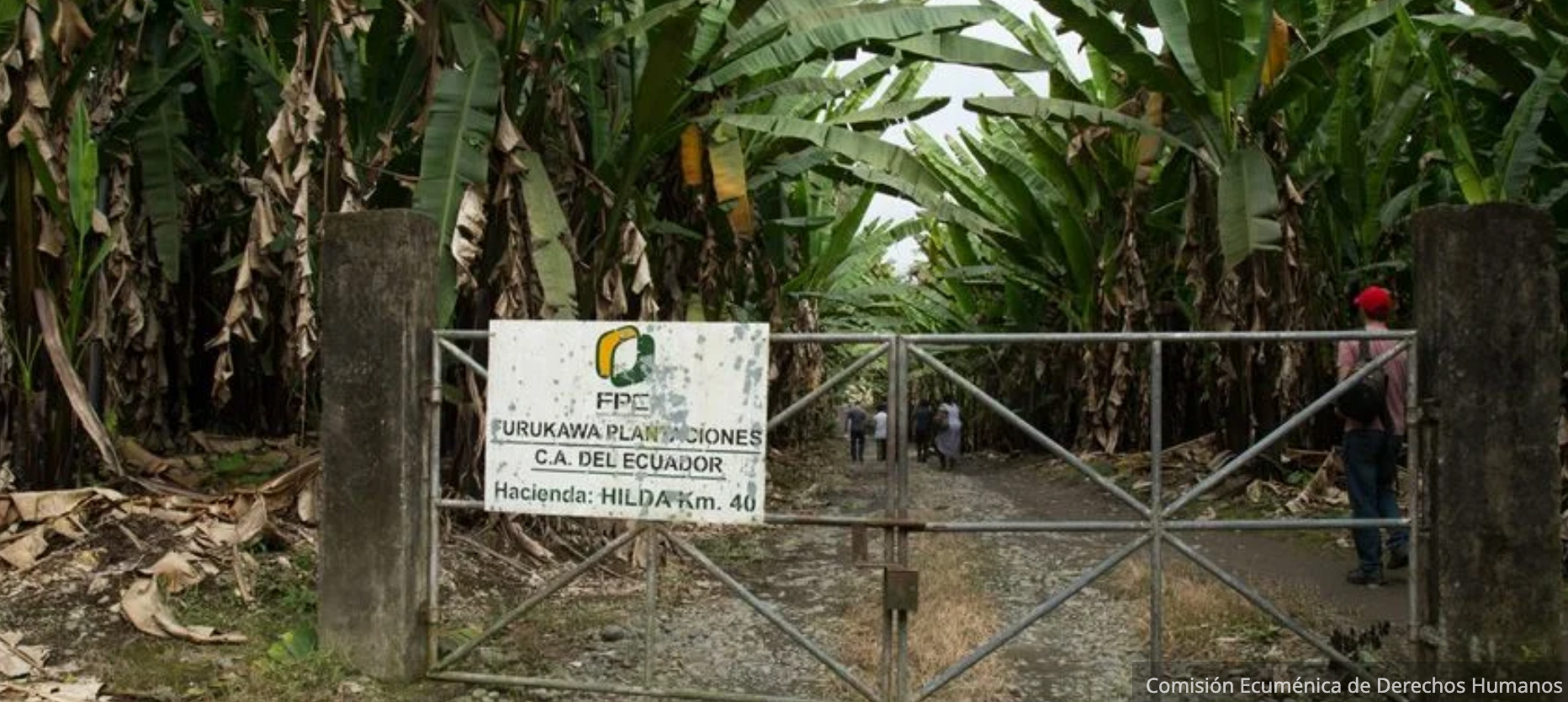
Furukawa Plantaciones C.A. del Ecuador carries a Risk Score of 100 — the maximum rating. The December 5, 2024 Constitutional Court ruling (Sentencia 1072-21-JP/24) found the company guilty of maintaining servidumbre de la gleba (serfdom) for over five decades. The court identified 342 victims who lived in plantation camps without electricity, clean water, sanitation, healthcare, or schools. Children as young as eight worked in the fields. Workers were paid as little as $200 per month through fraudulent lease contracts designed to disguise employment relationships.
The court ordered approximately $120,000 per victim — roughly $41 million total — with enhanced payments for women, minors, elderly victims, and those who suffered amputations. Criminal proceedings for human trafficking remain active. UN human rights experts publicly condemned the company on January 15, 2026. Ecuador's government issued a formal apology in May 2025.
The Japanese parent companies show clean corporate registrations. Mavenz Inc. operates from Tokyo. Sun-Oak Co. Ltd. and Mitsubishi Oji Paper Sales Co. Ltd. continue as active buyers. No sanctions. No Interpol notices.
How a Sister Company Inherits the Business
Evidencity's Illicit Network Intelligence reveals the corporate architecture enabling evasion. The network operates through layered entities sharing executives, ownership, and operational control — relationships invisible to entity-based screening.
Marca Abacá S.A. (Risk Score: 70) was incorporated in Ecuador on October 7, 2019 by Martín Salomón Cabezas Espinosa (Risk Score: 90). According to corporate filings, Cabezas Espinosa served simultaneously as legal representative of three entities: Furukawa's direct parent FPC Marketing Co. Ltd., the newly created Marca Abacá S.A., and — between June 2021 and June 2022 — as Secretary General of Ecuador's Vice Presidency. On January 23, 2023, Mavenz Inc. acquired 33% of Marca Abacá from Filipino national Rodel Amurao Valiente.
Trade data documents the operational shift. ImportGenius records show 183 shipments from Ecuador to Mavenz between 2008 and 2025. The most recent bill of lading, dated March 6, 2025, lists the shipper as Marca Abacá S.A. — not Furukawa Plantaciones. Meanwhile, Furukawa's reported workforce collapsed from 296 employees in 2023 to just 92 by March 2025.
The Japanese buyer network remained intact. Sun-Oak Co. Ltd., owned by Nippon Paper Group through subsidiary Nippon Paper Papylia Co. Ltd., purchased over 3 million kg of abaca from Furukawa between 2020 and summer 2023 — continuing purchases despite public forced labor allegations. Mitsubishi Oji Paper Sales Co. Ltd. bought at least 925,130 kg from 2020 through 2023. Neither company issued public statements addressing the Constitutional Court ruling.
UN experts warned in January 2026 that Furukawa is "reportedly planning to transfer productive land to other agricultural companies," raising concerns that "related parties may be used to evade compliance with the reparations process." Some plaintiffs have reportedly attempted to occupy company land to press for those reparations — and now face eviction.
Why the Shell Game Works
The Furukawa-to-Marca Abacá shift exposes a fundamental gap in corporate due diligence architecture. Entity-based screening checks corporate registrations, sanctions lists, and adverse media. Marca Abacá S.A. passes these checks: incorporated October 2019, tax ID 1793024769001, no sanctions exposure, no adverse media until the March 2025 trade data emerged. The legal entity is separate from Furukawa Plantaciones. The shared ownership through Mavenz Inc. (33% stake acquired January 2023) and shared legal representation through Martín Salomón Cabezas Espinosa exist in corporate filings — but relationship mapping requires connecting entities across jurisdictions and time periods.
The supply chain extends to consumer-facing brands. Nippon Paper Group — Sun-Oak's ultimate parent — manufactures household paper products sold under the Kleenex and SCOTTIE brands. According to the original Evidencity investigation, abaca from Furukawa reached tea companies through intermediate processors: Unilever Lipton purchased at least 100,670 kg of filter paper containing abaca between 2015 and 2016. Good Earth Tea (owned by Tata Consumer Products) bought 19,711 kg of tea bag filter paper in 2018. These purchases flowed through Ahlstrom Chirnside, which phased out Furukawa purchases after forced labor allegations emerged.
Japanese buyers face no enforcement action despite continuing purchases through 2023. Mitsubishi Paper Mills characterised its Furukawa relationship as "former business ties." Nippon Paper Industries declined comment, citing "confidentiality obligations." Meanwhile, UN experts confirmed that Furukawa has engaged in systematic retaliation against plaintiffs — filing unfounded criminal complaints, offering minimal out-of-court settlements, and running a public stigmatisation campaign portraying victims as opportunistic claimants.
No Withhold Release Order has been issued by U.S. Customs and Border Protection targeting abaca. The corporate structure makes the planned land transfer legally straightforward. The human cost remains invisible.
Zero Dollars, Zero Accountability
Fifteen months after Ecuador's Constitutional Court found Furukawa Plantaciones guilty of five decades of forced labor, the company has paid zero dollars in reparations. All 342 plaintiffs were fired. Trade data from March 2025 shows Mavenz Inc. receiving shipments from Marca Abacá S.A. — not from Furukawa itself. The workforce collapsed from 296 employees to 92. Some former plaintiffs attempting to occupy company land to secure their court-ordered reparations now face eviction.
Conventional screening identified Furukawa Plantaciones with a Risk Score of 100. The Constitutional Court ruling is documented. Criminal proceedings remain active. But Marca Abacá S.A., incorporated in 2019 with Mavenz acquiring 33% ownership in January 2023, carries a Risk Score of 70 and clean corporate filings.
UN experts warned in January 2026 that Furukawa "is reportedly planning to transfer productive land to other agricultural companies," raising concerns that "related parties may be used to evade compliance with the reparations process."
Evidencity's Illicit Network Intelligence reveals the relationships that connect Furukawa, FPC Marketing, Mavenz, and Marca Abacá through shared executives and ownership structures. Entity-based screening sees separate companies. Network mapping sees one continuous operation.