We flagged a company in April 2025 that was Sanctioned June 2026
In April 2025, Evidencity's Project Tantalus dataset flagged a Rwandan mining company as a suspected handler of minerals smuggled out of eastern Democratic Republic of the Congo (DRC). Fourteen months later, the US Treasury sanctioned it.
On 25 June 2026, the US Department of the Treasury's Office of Foreign Assets Control
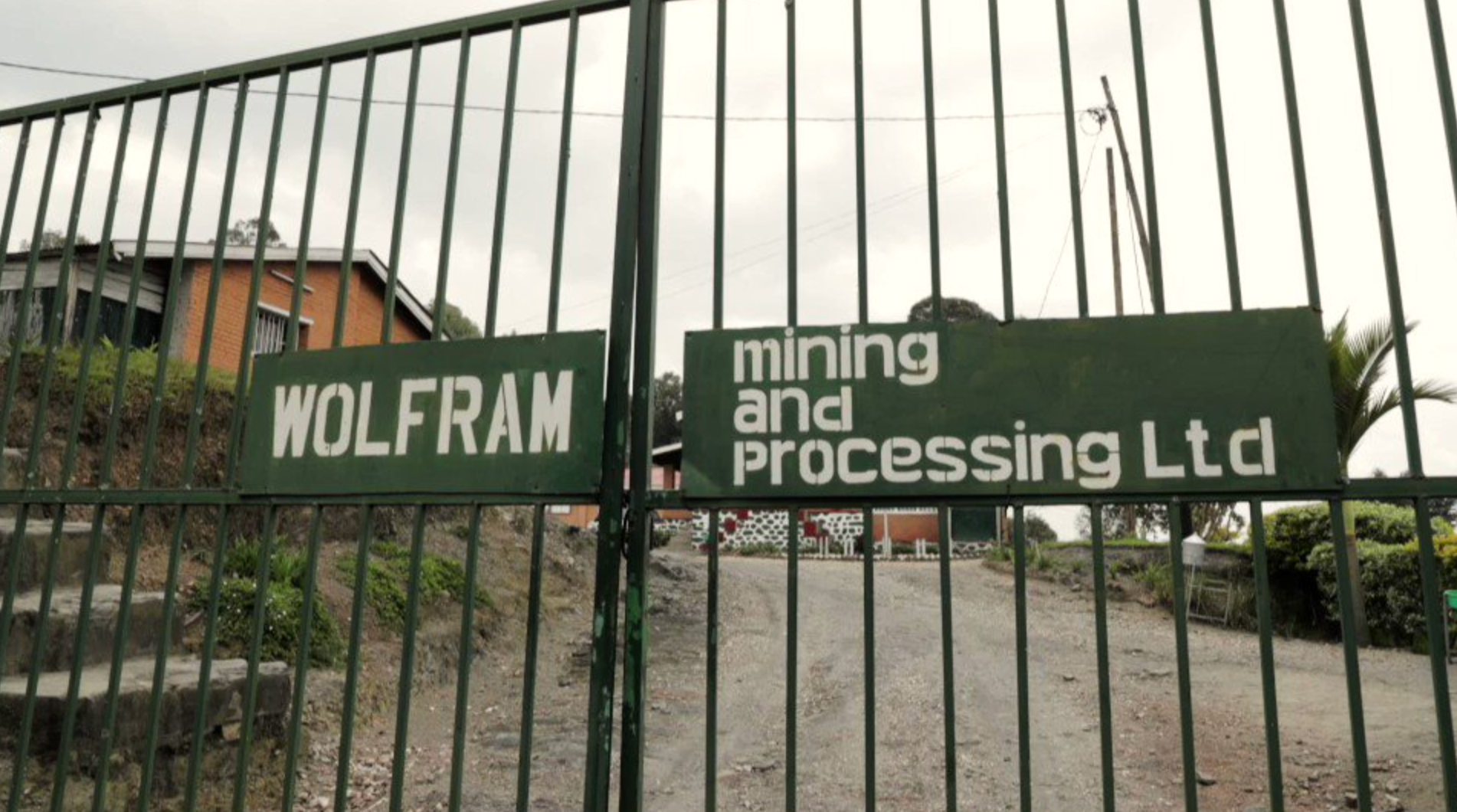
sanctioned Gasabo Gold Refinery Ltd, its chairman Jean Malic Kalima, and general manager Bosco Kayobotsi, along with three Rwandan mining companies tied to Kalima. The scheme moved gold out of Rwanda-backed March 23 Movement (M23) territory in eastern DRC into Rwanda for refining. One of the three mining companies, Wolfram Mining and Processing Ltd, was already logged in Evidencity's dataset.
Evidencity
launched its forced labor in critical minerals dataset, as part of its Illicit Network Intelligence product, in April 2025. The dataset named Wolfram Mining and Processing among the Rwandan companies believed to have purchased minerals smuggled from the DRC, tracing the connection to Swiss businessman Chris Huber.
The Huber network already in our data
Evidencity's dataset lists Huber as a board member of Wolfram Mining and Processing, believed to control its shares. The same entry names him a founding shareholder or beneficial owner across a cluster of Rwandan exporters, including Tawotin, Rudniki, and Rwanda Metals. That sourcing draws on United Nations reporting and an Amsterdam & Partners LLP dossier. Global Witness, which
investigated Huber's broader role laundering Congolese minerals through Rwanda, examined the same pattern in what researchers call the ITSCI Laundromat scheme.
The entry itself carried no separate designation and no risk-score modifier. It recorded the company as a suspected buyer of DRC-origin minerals, tagged it to Huber's wider network, and left it unchanged for 14 months.
That same Huber-linked cluster fed the trading chain Evidencity
documented in April 2026. The Congolese cooperative CDMC sold coltan to the Hong Kong trader East Rise Corporation, which sold it on to Ulba Metallurgical Plant in Kazakhstan, a Responsible Mining Initiative-approved smelter. Treasury
sanctioned CDMC and East Rise in August 2025. Wolfram Mining remained one network hop away, in the same dataset, unsanctioned, for another 10 months.
Treasury names the same network
Treasury's own account of Wolfram Mining runs through a different name. The company was established on 22 December 2006, per Treasury's own filing, and Treasury's designation traces its ownership to Jean Malic Kalima. The same designation ties Bugambira Mines and Rwinkwavu Mining, the other two mining companies named in the same action, to Kalima's ownership, and Kalima himself to Gasabo Gold Refinery.
Treasury's account describes Rwandan military personnel and M23 fighters moving gold from mining sites in Rwanda Defence Force and M23-held territory in South Kivu, across the border into Rwanda. From there, the gold moved to Gasabo Gold in Kigali, where refinery staff took possession and began processing it. At least 60 kilograms moved through the scheme since early 2026, worth millions of dollars. The European Union had already designated Gasabo Gold once before, Treasury's release notes, for the same conduct.
This is the fourth Treasury action tied to the
Washington Accords for Peace and Prosperity, the DRC-Rwanda framework signed 4 December 2025. Treasury
sanctioned the Rwanda Defence Force on 2 March 2026, the subject of Evidencity's
last piece on this network, then
sanctioned Joseph Kabila on 30 April and
sanctioned FDLR and M23 commanders on 2 June.
Worth keeping separate: the US and DRC also
signed a distinct Strategic Partnership Agreement the same day in Washington, covering US access to Congolese minerals. The Strategic Partnership Agreement, not the Washington Accords,
enabled the Chemaf acquisition Evidencity covered in its April 2026 piece.
Our dataset and Treasury's designation reach Wolfram Mining by two separate roads. Ours ran through Huber's board role at the company, documented in our dataset. Treasury's runs through Kalima's ownership of record. Different route, same company, same conclusion.
Why sanctions screening always arrives after the fact
A standard sanctions-list check on Wolfram Mining and Processing would have returned nothing until 25 June 2026. Network intelligence returned a flag 14 months earlier. No prior designation triggered it: the flag came from mapping Wolfram Mining inside a network of Rwandan exporters with a documented history of handling DRC-origin minerals. That is the distinction that matters for due diligence teams relying on list-matching tools. A clean sanctions screen tells you a government has not yet acted; it tells you nothing about whether the underlying relationships are clean.
For corporate counsel screening suppliers, or compliance teams reviewing a mineral sourcing chain that touches Rwanda, that gap is the exposure. Illicit Network Intelligence exists to surface exactly this: entities that read clean today because the paperwork has not caught up with the network yet.