US order targets Serbian copper producer
A recent Withhold Release Order (WRO) against copper and copper products manufactured by Serbia Zijin Copper D.O.O. surfaced on a clean country risk screen, and no sanctions exposure.
On 16 June 2026, US Customs and Border Protection (CBP)
issued a Withhold Release Order (WRO) against copper and copper products manufactured by Serbia Zijin Copper D.O.O. Serbia is a European Union (EU) accession candidate, clean on a country risk screen, with no sanctions exposure. The compliance gap was in the ownership chain.
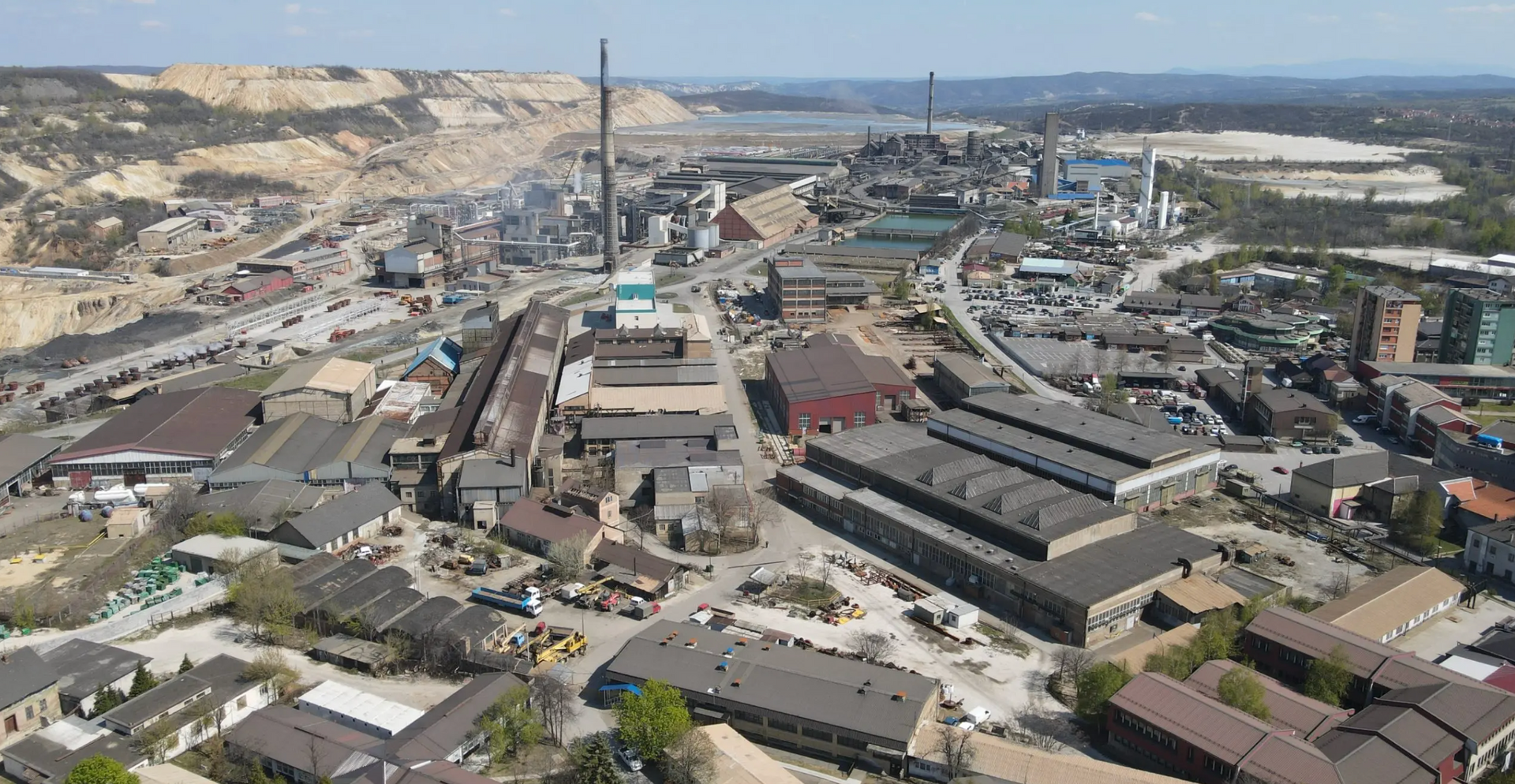
Zijin Mining holds a majority stake in Serbia’s Bor copper complex
In 2018, China’s Zijin Mining
acquired a 63% stake in RTB Bor, Serbia’s state copper company, creating Serbia Zijin Copper D.O.O. The acquisition was
framed as a flagship China-Serbia economic partnership: investment in a depressed industrial region, employment at scale, revival of a strategic national asset.
Zijin’s two Serbian operations
produced 296,000 tonnes of mine copper in 2025: the combined output of Serbia Zijin Copper at Bor and Serbia Zijin Mining at Čukaru Peki. This makes them Europe’s second-largest mined copper producer. Serbia
exported USD152.75 million in copper to Germany in 2024. Zijin Mining was also
planning a multi-billion expansion of its Serbian operations at the time CBP issued the WRO.
A country risk screen returns Serbia as a clean jurisdiction. The corporate structure placed a Serbian legal entity atop a Chinese majority shareholder. For a compliance team using geography-based tools, the ownership chain generated no alert.
Evidence of forced labour at Bor appeared in public reporting from 2021
A different picture
appeared in January 2021, when journalists from the Balkan Investigative Reporting Network (BIRN) interviewed Chinese workers at the Bor site. Workers described 84-hour weeks, wages arriving late, passports surrendered on arrival, and restrictions on movement. Accommodation consisted of rooms of roughly 10 square metres packed with bunk beds for 10 people. Some workers had
signed blank contracts before arriving in Serbia.
The labour conditions documented by BIRN were not concealed from Serbian authorities. Under the terms of a 2018 bilateral deal, Serbia’s Labour Law is
suspended for Chinese nationals at the site, removing the Labour Inspectorate’s right to review contracts or verify whether workers had been paid. The arrangement was on public record.
China Labor Watch
conducted field research at Bor in 2022 and again in 2024, interviewing migrant workers from China, India, Nepal, Zambia, and Indonesia. Its 2024 report, “Unseen Workers,” documented conditions matching six International Labour Organisation (ILO) indicators of forced labour: retention of identity documents, withholding of wages, restriction of movement, excessive overtime, intimidation and threats, and abuse of vulnerability. Debt bondage through upfront recruitment fees, with no guarantee of reimbursement,
appeared across multiple testimonies.
In December 2025, CBP
issued a WRO against Linglong Tire, a Chinese-owned tyre manufacturer operating in Serbia. On 16 June 2026, CBP
issued a WRO against copper and copper products manufactured by Serbia Zijin Copper, the fourth forced labour WRO in fiscal year 2026. It was
grounded in worker statements, photographs, focus group field notes, text message screenshots, open-source NGO reports, news media, and academic research: sources in the public domain since 2021.
Geography-based screening did not surface the ownership chain
The WRO blocks US importers as of 16 June 2026. For European buyers, it is a regulatory preview.
Zijin Mining
appeared on the Uyghur Forced Labor Prevention Act (UFLPA) Entity List in January 2025, added for forced labour practices at its Xinjiang operations. The listing named the parent company. Serbia Zijin Copper, incorporated as a distinct Serbian legal entity in a non-sanctioned jurisdiction, would not generate a matching alert in entity-screening tools organised by country risk. The UFLPA and the WRO are different mechanisms: the UFLPA applies a rebuttable presumption to goods from specific listed entities in specific jurisdictions; the WRO
applies to any product from any company in any country where CBP finds evidence of forced labour. Both actions target the same corporate structure. Standard screening tools processed them as separate signals.
Germany’s Supply Chain Due Diligence Act (Lieferkettensorgfaltspflichtengesetz, LkSG) has
required companies to conduct and document supply chain due diligence since January 2023. The Corporate Sustainability Due Diligence Directive
extends civil liability provisions to EU companies from 2029. Both require demonstrable investigative action, not awareness after the fact. A German manufacturer that sourced Serbian copper in 2024 and did not investigate the ownership chain may face exposure under the LkSG regardless of the country score that anchored its analysis.
The evidence existed in the public record from 2021. The screening architecture, built on country scores and entity lists rather than ownership-chain mapping, was not designed to surface it.
Forced labour enforcement has crossed a European border. The UFLPA listing named the parent company. The WRO followed the operations. For European buyers still relying on geography as a proxy for exposure, the enforcement signal arrived in June 2026. LkSG obligations have applied since January 2023.