Killing Tren de Aragua’s founder barely moved its network
When a criminal network loses its most famous face, the map shows what was really holding it together
On 12 June 2026, President Donald Trump
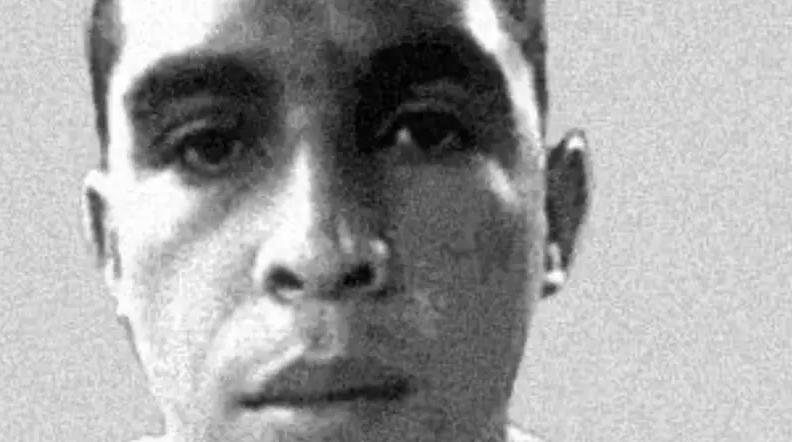
announced on Truth Social that US Southern Command had carried out a “swift and lethal kinetic strike” against Héctor Rusthenford Guerrero Flores, alias “Niño Guerrero,” the founder and longtime leader of Tren de Aragua, ending one of the most recognizable careers in Latin American organized crime. Defense Secretary Pete Hegseth said the strike had occurred earlier that week. The operation was “closely coordinated” with the Venezuelan government, and Caracas
confirmed it had participated in an operation in the southeastern state of Bolívar, saying Flores was killed during clashes with members of criminal groups.
Guerrero had been a fugitive since he escaped his Tocorón prison stronghold ahead of a September 2023 security raid. He carried an Interpol Red Notice, and the US State Department had
offered up to USD5 million for information leading to his arrest. The intuitive reading wrote itself: behead the organization, and the organization falls.
Our intelligence data tells a more uncomfortable story.
In Evidencity’s Tren de Aragua INI dataset, Guerrero is unmistakably important. He is the highest-degree individual in the file, appearing in 66 relationships, roughly 4.6% of the 1,435 connections we have mapped. By the standard of any single person, that is a dense, central position. It is also a distant second. One node carries 369 relationships, more than a quarter of every connection in the file: the organization itself, Tren de Aragua as an entity. Guerrero is the second-largest node on the map, not its gravitational center. The center is the brand.
Removing the man, then the brand
We removed Guerrero from the graph and measured what survived. Prior, the dataset’s largest connected cluster held 475 nodes. Delete Guerrero, and 467 of them stay connected. Only five subjects fall away entirely: the handful of contacts who reached the network through him and no one else. The reason is structural. Of his 66 direct contacts, 58 are also tied straight to several other key subjects in the the organization node, so they lose one relationship without losing their place.
Then we ran the opposite experiment. Remove the organization node instead of the man, and the largest cluster collapses from 475 to 193. Cut both, and 89 remain. Killing the founder strands five people, while dissolving the brand erases roughly 60% of the network. Guerrero was replaceable plumbing. The criminal brand is ultimately stronger than the man.
The successors do not need to be imagined, because they already sit in the file. Yohan José Romero, alias “Johan Petrica,” a co-founder whom the US Treasury
sanctioned on the same day as Guerrero,
runs the gang’s illegal gold-mining operations in Las Claritas, Bolívar. Evidencity’s dataset adds further depth. It records Larry Amaury Álvarez Núñez, alias “Larry Changa,” as a co-founder and the first member to enter Chile. Josué Ángel Santana Peña heads the “mega gang” of Santanita. Guerrero’s brother Gerso and half-brother Cheison appear alongside regional bosses who have run cells across Chile and Colombia.
The depth runs past people into institutions. The dataset records Fundación Somos El Barrio JK, a charity created under Guerrero that received Venezuelan government funds. In the file’s words, it acted as “an alternative local government,” administering community kitchens and shaping local elections.
Tren de Aragua resembles a federation of co-founders, cousins and half-brothers, and regional franchises rather than a pyramid with one apex, which is precisely why the node-removal arithmetic looks the way it does.
Agreement with one caveat
Open sources reach the same conclusion. Chilean organized-crime prosecutor Héctor Barros, who coordinates one of the largest money-laundering cases against the group,
told reporters that this “is not a criminal structure sustained solely by the leadership of Niño Guerrero,” naming Romero and one other senior figure as plausible heirs. Barros leads the case that arrested 19 people in June 2026 over a network alleged to have moved some USD85 million between 2022 and 2025. Its reporting lines, he says, reached senior figures well above any one boss. The US Treasury had said as much in July 2025, when it
sanctioned Guerrero alongside five other leaders on a single day, treating leadership as plural rather than singular.
One honest caveat belongs on the record. Resilience does not mean nothing has changed. InSight Crime
notes that the group’s international spread appears to have slowed and that the loss of Tocorón could disrupt its transnational operations. Guerrero’s death may scatter the network into smaller, harder-to-track cells rather than strengthen the state’s hand. Survival and fragmentation can coexist here: the group can outlast its founder and splinter at the same time.
For the compliance officer, the due-diligence analyst, or the counsel mapping exposure to a sanctioned network, the lesson sits in the method. A name-based screen treats a kingpin as the keystone and assumes his removal closes the file. A network view asks a sharper question: where does a structure’s coherence actually live? For Tren de Aragua, the answer was never one man. It was the identity that 369 relationships were built around, and the bench of co-founders, kin, and franchises already positioned to carry it. Decapitation made the headlines. The map barely moved.