How Iran's Oil Money Reached Dubai Through Shell Companies
On 7 August 2026, the US Treasury's Office of Foreign Assets Control designated eleven companies and five individuals it says built and ran a currency network for Iran's regime.
On 7 August 2026, the US Treasury's Office of Foreign Assets Control
designated eleven companies and five individuals it says built and ran a currency network for Iran's regime. Treasury
calls it the eighth such action against Iranian shadow banking so far this year. Treasury Secretary Scott Bessent
said Iran's shadow banking system is “buckling under Economic Fury” and that the regime is “running out of ways to move money.” The individual entities Treasury named look unremarkable on paper. They include an Iranian exchange house, a handful of general trading firms registered in Hong Kong and Singapore, and a Dubai company that also does business as a petrochemical trader. None of them advertised a connection to Tehran.
How the oil revenue actually moved
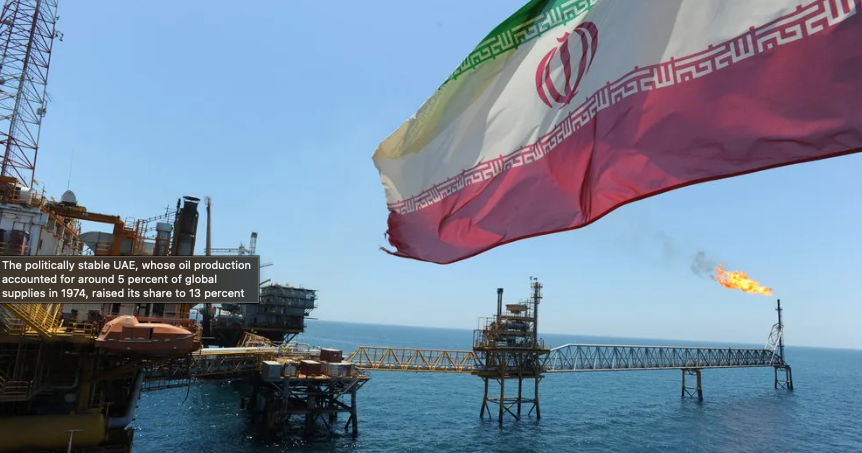
Iran's state oil exporters, including the National Iranian Oil Company, Triliance Petrochemical, and Sepher Energy Jahan, sell petroleum abroad in violation of US sanctions. Iran's Shahr Bank then
retrieves the proceeds through Dubai-based exchange houses, principally Titan Exchange and Alps International LLC-FZ. A coordination unit inside a company called Farab Soroush Afagh Qeshm arranges the onward transactions. Internally known as the Safe Group and based in the UAE, the unit works with shell companies in China and the UAE to move the funds further from their source. Titan Exchange itself operates under at least two additional names, Titan Land Petrochemicals Trading LLC and Titan Energy Petroleum Products Trading Co. LLC, matching the same energy-sector cover the wider scheme relies on.
Alps International generates invoices on shell company letterheads to disguise the payments and routes them through intermediary accounts. The network
moved hundreds of millions of dollars in multi-currency transactions during 2026 alone, according to Treasury. Three of the named shell companies, Oviedo Overseas, Cailafang Pte. Ltd., and Blue Dash General Trading, are registered in Hong Kong and Singapore rather than Iran or the UAE. Each additional jurisdiction adds a layer between the oil sale and the money reaching Tehran, and each layer looks, by itself, like an ordinary regional trading relationship. Treasury also
named Saeed Ghasempour, a Shahr Bank employee, and a facilitator for the Islamic Revolutionary Guard Corps' Qods Force among the five individuals designated alongside the corporate network. The other two, Shima Sharifi and Peivand Mohammad, both worked directly for Farab Soroush Afagh Qeshm. That is a reminder of how small a dedicated coordination team can be while still moving hundreds of millions of dollars.
Basic screening could not see this network
For a corporate intelligence or compliance team, the practical problem sits earlier than the 7 August designation. Before that date, none of the shell companies Treasury named carried a sanctions flag. A bank running standard due diligence on Oviedo Overseas or Cailafang Pte. Ltd. before 7 August would have found two ordinary Asian trading companies with no listed connection to Iran. Entity-level sanctions screening checks a name against a list. It does not surface the transaction pattern, shared address, or beneficial ownership link that ties an ordinary-looking Hong Kong shell to a Dubai exchange house retrieving Iranian oil revenue.
That gap is what network-level mapping is built to close: tracing the corporate structures and transaction relationships between counterparties before a regulator has to name them publicly. Evidencity's Illicit Network Intelligence platform maps exactly this kind of structure. It links beneficial ownership chains and front-company relationships across jurisdictions, so a due diligence team can see a network's shape, not only its individual, still-unlisted nodes. That distinction, between screening entities and mapping networks, is the difference between finding out on 7 August and finding out a year earlier.
A due diligence file built from sanctions-list checks alone cannot demonstrate that a firm looked for network exposure before that exposure became public. A file built from ongoing network mapping can, and that difference separates a defensible compliance program from one that only reacts after Treasury has already acted.
The same action
removed seven individuals and three entities from the sanctions list over unrelated narcotics designations. That is a reminder that Treasury's list changes in both directions, and that a name's absence from it today is no guarantee it stays absent.
Treasury describes oil revenue routed through an exchange house, laundered through invoice fraud, and passed across three additional jurisdictions before reaching Tehran. The mechanism follows the same shape as trade-based money laundering schemes documented across other commodity supply chains. Eight designations against Iranian shadow banking in a single year suggest the network reconstitutes faster than enforcement can dismantle it. For compliance teams, that argues for continuous network mapping rather than periodic list-checking, since today's unremarkable counterparty is next year's designation.