
Data Stories: Peace Negotiations as Criminal Sanctuary
Once a month, Evidencity looks into its Illicit Network Intelligence data and pulls out a story that helps reveal how our data is different.
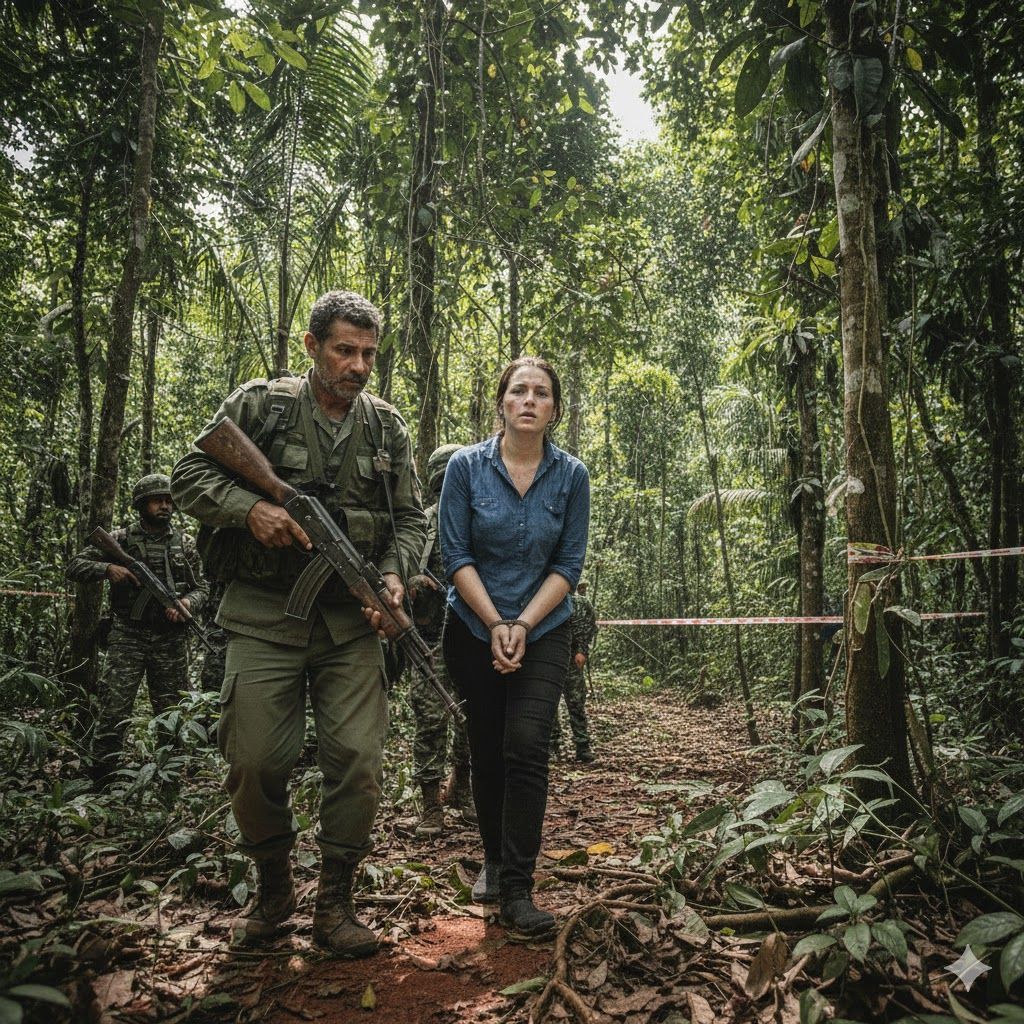
On September 21, 2024, Alexander Farfan Suarez walked councilwoman Sandra Betancourt out of six days of captivity in Argelia, Cauca. The FARC dissident commander had a message for her, delivered in front of shocked local officials: "I don't know how you will continue as a councilwoman, but you can't return to Cauca. All the western command fronts have orders to ensure this is enforced."
Farfan was supposed to be a peace facilitator. The Colombian government had appointed him in September 2023 to President Gustavo Petro's Total Peace process, suspending his arrest warrant to enable negotiations with Estado Mayor Central dissidents. Instead, he'd defected back to Ivan Mordisco's faction seven months earlier in February 2024—reconstituting the same command networks he was meant to help dismantle.
Former hostage Ingrid Betancourt, whom Farfan had held captive for six years starting in 2002, called him "a man of infinite darkness." But the government's peace architecture had transformed him into something else: a protected negotiator with suspended criminal liability, free to operate under diplomatic cover while rebuilding his networks.
He wasn't alone.
The Visible Surface
Farfan's defection exposed a pattern that continued through 2024 and into 2025. Between March 2023 and July 2024, at least 19 Estado Mayor Central members received the same treatment: arrest warrants suspended, legal protections activated, peace negotiator credentials issued. The Colombian Attorney General's office processed these suspensions under Resolution 65 of 2024, transforming wanted criminals into government-authorized facilitators overnight.
Background checks return government peace facilitators engaged in Total Peace negotiations. Warrants show up in historical records with official suspension dates. The screening captures their diplomatic status but misses their operational reality.
Diana Milena Agudelo Salazar appears as a peace negotiator. Walter Freddy Ruiz Montaño shows government-sanctioned facilitator credentials. Jorge Luis Caicedo Castro carries the same protected status. Standard screening misses what connects them: identical network structures, uniform connectivity patterns, and a command apparatus that weaponized peace talks.
The Hidden Reality
Evidencity's Illicit Network Intelligence data maps a different architecture entirely. Nine of the Estado Mayor Central's top ten most connected operatives share a remarkably uniform profile: 48 professional relationships each, Risk Scores between 80-100 (where 100 is high risk), and membership in what functions as a criminal board of directors governing Colombia's largest FARC dissident network.
The uniformity is structural. The data reveals formalized command nodes in a network of approximately 48 members who collectively control drug trafficking corridors, territorial operations, and revenue streams across Guaviare, Meta, Caquetá, Cauca, and Nariño departments. Each maintains near-identical connectivity patterns, suggesting coordinated governance rather than organic criminal association.
Standing above this directorate is Nestor Gregorio Vera Fernandez, aka Ivan Mordisco, with 79 relationships. The United States designated him as a Specially Designated Global Terrorist in November 2021, making him Colombia's most wanted criminal. He was the first FARC commander to reject the 2016 peace agreement, establishing the Estado Mayor Central's dissident structure. His Risk Score: 100.
Yet eight of his fellow Estado Mayor Central commanders operate at Risk Score 99, despite documented roles in the same command structure. They carry no international sanctions. No OFAC designations. No terrorism classifications. The peace process granted them something more valuable than legitimacy: invisibility through diplomatic status.
Rather than dismantling networks during negotiations, these commanders consolidated them. Peak connectivity coincided precisely with suspended warrants. They used diplomatic immunity to operate without interference.
Business Implication
Mordisco carries a U.S. terrorism designation and Risk Score 100. His eight fellow Estado Mayor Central commanders operate at a Risk Score in the 90s with no international sanctions despite identical command roles. Standard screening captures Mordisco. The operational infrastructure surrounding him passes through undetected.
Farfan's trajectory illustrates the commercial implications. Captured in 2008's Operation Jaque for kidnapping Ingrid Betancourt, he received peace facilitator credentials in September 2023. His arrest warrant suspension created a window of legal protection. He defected to Mordisco's faction by February 2024, months before the pattern became publicly visible. When he appeared releasing Sandra Betancourt in September 2024, he was issuing territorial control orders for western Cauca, demonstrating command authority maintained throughout his "peace facilitator" period.
Commercial operations in EMC-controlled territories intersect with this hidden governance structure. Coca production, mining operations, and logistics infrastructure all move through corridors these commanders control. The peace process created a legal shield around the individuals managing these networks while their operational control remained intact.
The 48-relationship uniformity across Estado Mayor Central's command structure reveals institutionalized territorial governance masquerading as diplomatic transition. Each commander's identical connectivity pattern maps to specific revenue streams, enforcement mechanisms, and commercial dependencies. In April 2024, the EMC split. Alexander Díaz Mendoza, aka Calarcá Córdoba, led one faction continuing peace negotiations. Mordisco's faction broke off talks entirely. The criminal infrastructure persisted in both.
Conclusion
Between March 2023 and May 2024, Estado Mayor Central commanders operated under full legal protection while maintaining command over Colombia's largest FARC dissident network. Nineteen arrest warrant suspensions. Fourteen months of diplomatic immunity. Zero disruption to operational networks processing an estimated $500 million annually in cocaine revenue.
When the ceasefire partially collapsed in May 2024 following the killing of four Indigenous children, and negotiations with Mordisco's faction ended completely, the command structure remained intact. The 48-member directorate had spent over a year consolidating control under diplomatic cover. The uniformity of their connectivity patterns persisted through the EMC's split into negotiating and non-negotiating factions.
In November 2025, Mordisco announced his faction would resort to political violence ahead of Colombia's May 2026 presidential elections. The threat wasn't theoretical—his network had spent two years operating under legal protection, strengthening territorial control across eight departments identified as high-risk zones for election violence.
Standard screening captures peace negotiators with suspended warrants. Evidencity's Illicit Network Intelligence reveals the operational architecture those negotiations protected. The difference determines whether commercial operations understand who actually governs the territories they operate in.