Congo's cobalt quota system just showed its single point of failure
A customs-platform outage put USD1.1 billion in cobalt exports at risk in the country that supplies 70% of the world's cobalt. The failure was administrative, arriving six weeks after Evidencity flagged that every tonne of US cobalt still runs through a single foreign-controlled chokepoint.
The Democratic Republic of Congo's strategic minerals regulator, ARECOMS,
set 5 July 2026 as the cutoff for cobalt exporters to use their first-half 2026 quotas. Miss it, and the unused volumes would be
reassigned to ARECOMS's own strategic reserve, a 10% carve-out of the annual cap.
Congo has been actively managing this market since it suspended cobalt exports outright in February 2025. That intervention helped drive prices up 160% since then, to roughly USD26 a pound, or USD57,320 a tonne. ARECOMS has also set a 96,600-tonne annual export cap for both 2026 and 2027. The cap formalises the quota system that first
allocated volumes to exporters in October 2025. Glencore's initial shipment
cleared only after weeks of confusion over royalty payments and quality certification.
The July deadline was meant to show the system had matured past that early stumbling. Instead it produced a different failure at a different stage of the same pipeline.
Then the system built to enforce the deadline stopped working. A 2 July 2026 letter from Congo's Chamber of Mines to ARECOMS, seen by Reuters,
said exporters could not register export declarations on the customs platform after 1 July. The blockage traced to a missing step: ARECOMS had not sent customs the formal notification needed to keep processing quota-linked exports. Producers asked ARECOMS to fix the platform and extend the deadline. They also asked Congo's prime minister to intervene directly. As of 13 July 2026, no public resolution had been reported.
Major producers with cobalt and nowhere to ship it
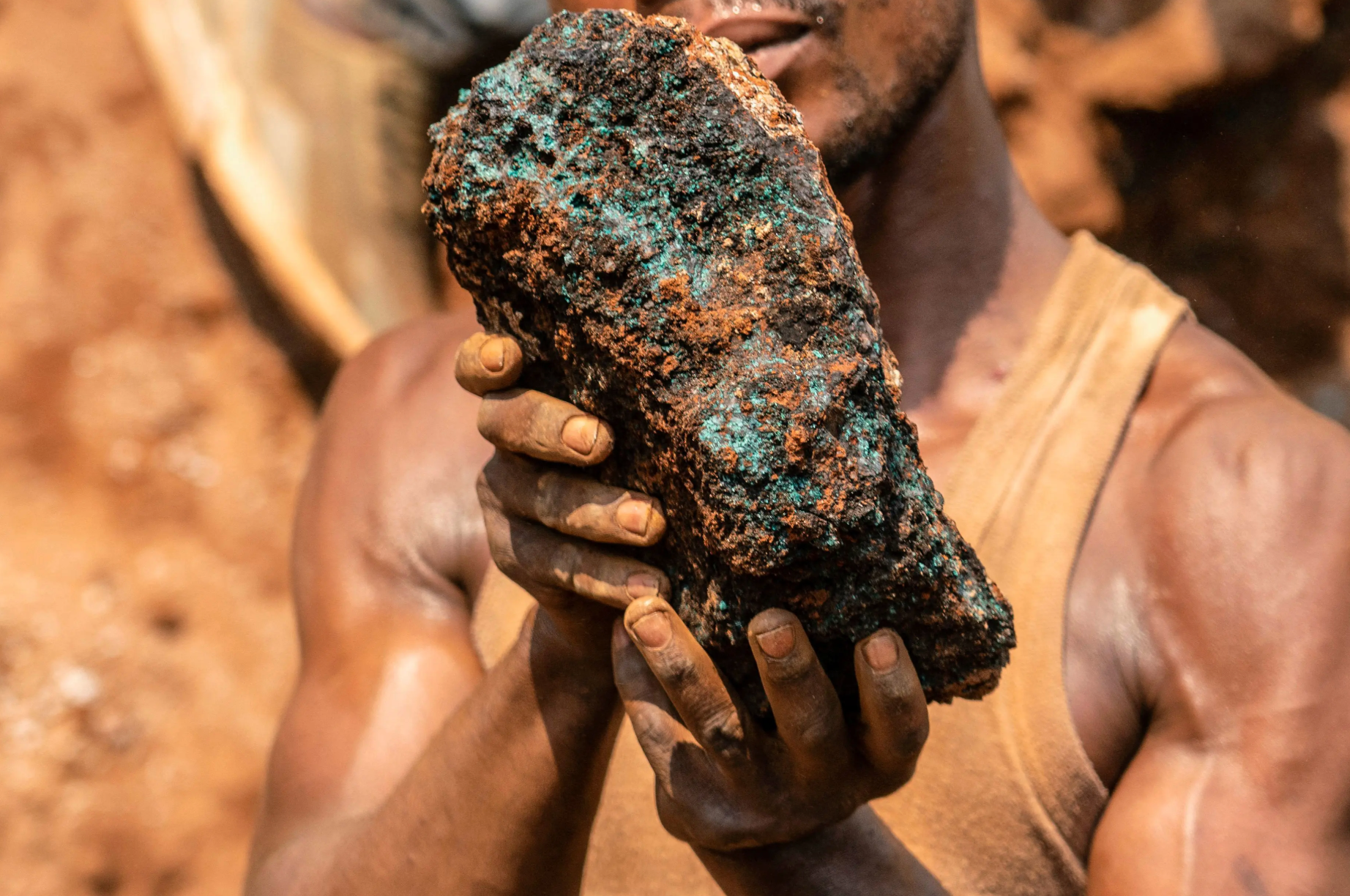
Congo produces roughly 70% of the world's mined cobalt. Its mines are run by companies that supply nearly every battery and phone maker on earth: China's CMOC, London-listed Glencore, Eurasian Resources Group, and Huayou Cobalt among them. CMOC and Glencore, the two largest cobalt producers globally, also
hold the largest individual quota allocations under the system.
One industry source
estimated the exposure at up to 20,000 tonnes of cobalt, worth an estimated USD1.1 billion at current prices. That volume sat at risk of forfeiture over a platform outage lasting under a week. A CMOC source
told Reuters the company had asked ARECOMS for a one-month extension and received no response. The source warned that CMOC stood to lose almost its entire second-quarter quota if the issue dragged on. Between 60% and 75% of exporting companies were reportedly on track to miss the deadline. Their cobalt was ready to ship, but the system meant to record the shipment had stopped functioning.
Why a country-risk screen would never have caught this
This episode is a single point of failure inside a price-support quota regime that Congo's own government designed and now cannot reliably operate day to day. It involves no sanctions designation, no entity list, and no conflict-minerals allegation.
No agency has publicly claimed ownership of the fix. ARECOMS, the mining ministry, and the industry chamber
did not immediately respond to Reuters' requests for comment. Exporters have been left to lobby the prime minister's office directly.
Evidencity identified the adjacent risk in May. We
wrote that the EGC-EVelution-Trafigura memorandum of understanding sets out the first credible US-DRC cobalt corridor outside Chinese-controlled refining, and that the facility underpinning it does not open before 2029. That piece argued every tonne of cobalt consumed in the US before then still passes through Chinese refining. This episode adds an earlier vulnerability to that same exposure. Even a fully built alternative refining corridor still depends on Congo's own export administration functioning well enough to let cobalt leave the country in the first place. Refining diversification, however well financed, does not reach that layer of the supply chain at all.
Buyers face a blind spot no screen catches
Procurement and compliance teams often treat quota compliance as a stable, plannable line item on a regulatory calendar. That habit carries a risk that neither a country-risk score nor an entity screen is designed to surface. That risk is administrative fragility inside the exporting jurisdiction itself: it arrives with no advance warning and no party publicly accountable for fixing it. Closing that gap requires jurisdiction-level intelligence that tracks more than who is sanctioned or listed. It means tracking whether the institutions a supply chain actually depends on, customs platforms, export regulators, ministerial sign-off chains, are functioning day to day.
For buyers with concentrated exposure to a single-source commodity like cobalt, this is no longer a theoretical risk. Whether this specific outage is resolved in days or drags on unresolved, the underlying finding holds either way. The chokepoint sits inside Congo's own export bureaucracy, and it can fail without triggering any signal a standard risk screen is built to catch.