How $580 Million Moved Through “Legitimate” Colombian Businesses
Nine registered businesses in Medellín, Envigado and Barranquilla spent years moving drug money before anyone noticed.
On 10 September 2026, Colombia's Fiscalía General de la Nación and the Policía Nacional's anti-narcotics directorate announced the dismantling of a financial network.
Nine registered companies and four commercial establishments in Medellín, Envigado and Barranquilla were at the center of the operation and encompassed civil engineering, consulting, administrative services, machinery repair, currency exchange and financial services. The action detained 10 people. Coordinated with the US Drug Enforcement Administration, Colombian investigators called it Operación Imperium. The Fiscalía traces the network's activity back to 2018, eight years before this month's arrests. They were licensed, operating in declared sectors and indistinguishable from any other small or mid-sized Antioquia business.
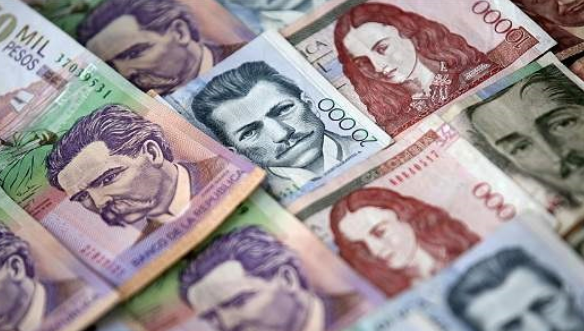
Fiscalía investigators found that the nine companies lacked the infrastructure and operating capacity to match the transaction volumes running through their accounts. Their financial statements did not reconcile with their bank activity or their declared economic activity. Between 2018 and 2026, the network moved roughly 2.3 trillion pesos (some USD580 million at the current exchange rate) through close to 2,000 international transactions. The currency-exchange and financial-services entities did the conversion work, turning drug proceeds into transactions that looked like ordinary cross-border business. Fiscalía traced that money into real estate, vehicles and other assets, and has now seized more than USD12 million of it.
A second channel ran alongside the conventional laundering: about USD180 million in USDT, a dollar-pegged stablecoin. The stablecoin moved into cold wallets and out to a cryptocurrency exchange based in Iran. Those transfers used accounts the US Office of Foreign Assets Control had already flagged for narcotrafficking and money laundering. Investigators traced the crypto leg using the same sanctions list built to block it.
We now know that the network split into two cells. Wilmar Albeiro Mejía Úsuga, alias Richard, ran the Estructura Juan de Dios Úsuga, a Clan del Golfo cocaine-trafficking cell operating through the port zone of Turbo, Antioquia. Its proceeds fed into a separate financial cell led by Hugo Daniel Giraldo Santamaría, who managed monetization and resource distribution. Four others worked alongside him: his wife Carolina María Giraldo, Janeth Catalina Cano Santamaría, Johan Mateo Ruiz Orijhuela and Luis Andrés Ospina Ochoa.
Media coverage of the network's reach into Medellín's older criminal hierarchy, however, diverges on one point. Infobae reported Giraldo Santamaría as the nephew of José Leonardo Muñoz Martínez, alias Douglas, a former negotiator in the government's urban peace talks and a historic leader of La Oficina. El Colombiano placed the family tie one step further away. It described Giraldo Santamaría as the associate of Jhony Alberto Muñoz Laverde, alias El Sobri, the figure El Colombiano identifies from its own earlier reporting as Douglas's actual nephew. Both versions tie the laundering operation to La Oficina's leadership, not to an anonymous shell structure. The two outlets simply disagree on which of the two men carries the family name.
One of the 10 people detained faces extradition to the US.